
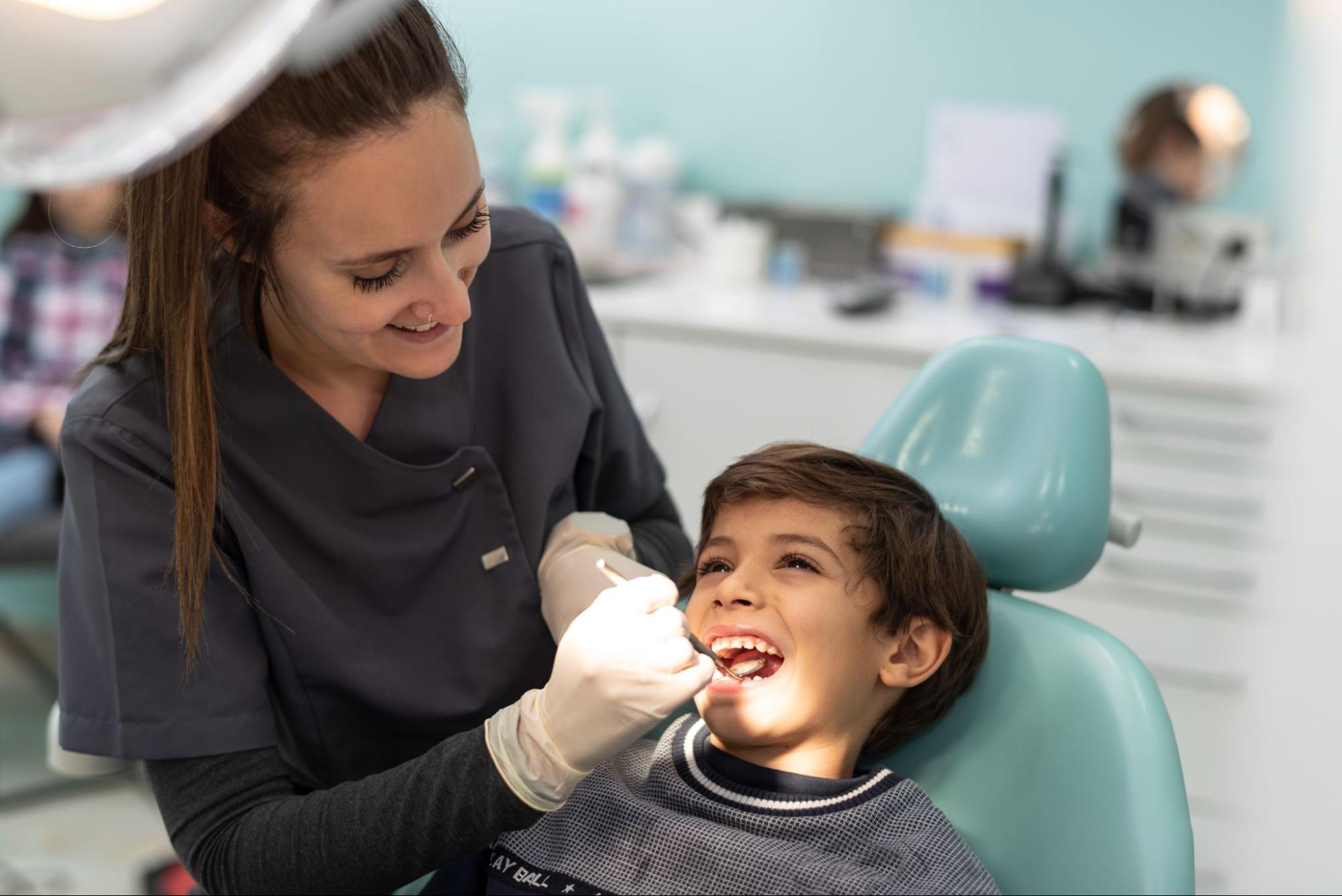
When people picture orthodontics, they usually think of straightening crooked teeth. That is part of it, but a great deal of what an orthodontist does is correcting how the upper and lower teeth meet, which is called your bite. A healthy bite makes it easier to chew, speak, and keep your teeth clean, and it reduces uneven wear over a lifetime. Here are the most common bite problems we see, what causes them, and how each one is typically corrected.
Overbite
An overbite is when the upper front teeth overlap too far over the lower front teeth. A small amount of overlap is normal and healthy. A deep overbite, though, can wear down the lower teeth, strain the jaw, and in some cases cause the lower teeth to bite into the roof of the mouth. Orthodontic treatment gradually repositions the teeth, and sometimes guides jaw growth in younger patients, to bring the bite into a healthier alignment. Both braces and clear aligners can correct many overbites.
Underbite
An underbite is the reverse: the lower front teeth sit in front of the upper front teeth. It often has a skeletal component, meaning the lower jaw grows further forward than the upper, so timing matters. Catching an underbite early, while a child is still growing, can make correction simpler. In adults, underbites are still very treatable, though more involved cases may combine orthodontics with other care. This is one reason early evaluation for children is so valuable.
Crossbite
A crossbite happens when one or more upper teeth sit inside the lower teeth rather than outside, either at the front of the mouth or along the sides. Left untreated, a crossbite can cause uneven tooth wear, gum problems, and even asymmetric jaw growth in children. Treatment usually involves widening the arch and repositioning the affected teeth so the upper and lower sets line up correctly.
Open bite
An open bite is when the upper and lower front teeth do not touch even when the back teeth are closed, leaving a visible gap. It can make biting into food awkward and is sometimes linked to long-term thumb sucking or tongue habits in childhood. Correcting an open bite focuses on closing that gap and addressing the underlying habit when one is present, so the result holds.
Crowding and spacing
Crowding is the most familiar issue of all: not enough room in the jaw for the teeth, so they overlap, twist, or push out of line. Beyond appearance, crowded and crooked teeth are harder to clean, which raises the risk of cavities and gum disease over time. Spacing is the opposite problem, with gaps between teeth. Both respond well to orthodontic treatment, which creates or closes space to bring everything into even alignment.
Why correcting your bite matters
A misaligned bite is not only a cosmetic concern. Over years, it can lead to uneven wear, jaw discomfort, difficulty cleaning certain teeth, and added strain on your dental work. The good news is that every problem above is treatable, and the right approach depends on the specifics of your case. Whether that turns out to be braces in Billings or a course of clear aligners, a proper evaluation is the place to start.
If you are noticing any of these signs in your own smile or your child’s, it is worth a conversation. You can explore your options for Billings orthodontic treatment, and if you are still comparing practices, our guide on how to choose an orthodontist in Billings walks through what to look for.
Get an expert evaluation
Bites are easier to assess in person than to self-diagnose, which is why a professional evaluation is so useful. At Kovacs Orthodontics, Dr. Kovacs has corrected these bite problems for families across Montana since 1994, and he will tell you honestly what your smile needs and what it does not. If something here sounds familiar, we are glad to take a look.
Frequently Asked Questions
Can adults fix bite problems, or is it only for kids?
Adults can absolutely correct bite problems. While some issues are simpler to address while a child is still growing, healthy teeth can be moved at any age, and many of our patients are adults treating long-standing bite concerns.
Do bite problems cause health issues, or are they only cosmetic?
They can affect more than appearance. An uncorrected bite may lead to uneven tooth wear, jaw discomfort, and teeth that are harder to keep clean, which raises the risk of cavities and gum disease over time. Correcting the bite protects long-term oral health.
How do I know which bite problem I have?
The most reliable way is a professional evaluation. An orthodontist can identify the specific issue, explain what is causing it, and recommend the right treatment. Many signs overlap, so an in-person exam beats trying to diagnose it yourself.